Balassagyarmat · Unsdorf · Újfalu · Bilke · Ricse · Felegyhaz (Kiskunfélegyháza) · 1887–1944
Among the uniquely gifted rabbonim of the communities of Czechoslovakia and Hungary in the decades preceding the Holocaust was Reb Ahron Mordechai Lieberman — counted among the most prominent rabbonim of his time, a man of broad vision who bore the burden of communal responsibility and channeled his great energy on behalf of the tzibur. Thanks to his exceptional personal qualities, he rose to a position of great respect and was held in high esteem wherever he went — in addition to his gadlus in Torah and his exceptional talent in managing rabbinic affairs. Known not only for his gadlus baTorah but also for his broad general education, he was fluent in several languages and able to connect with people of varied backgrounds.

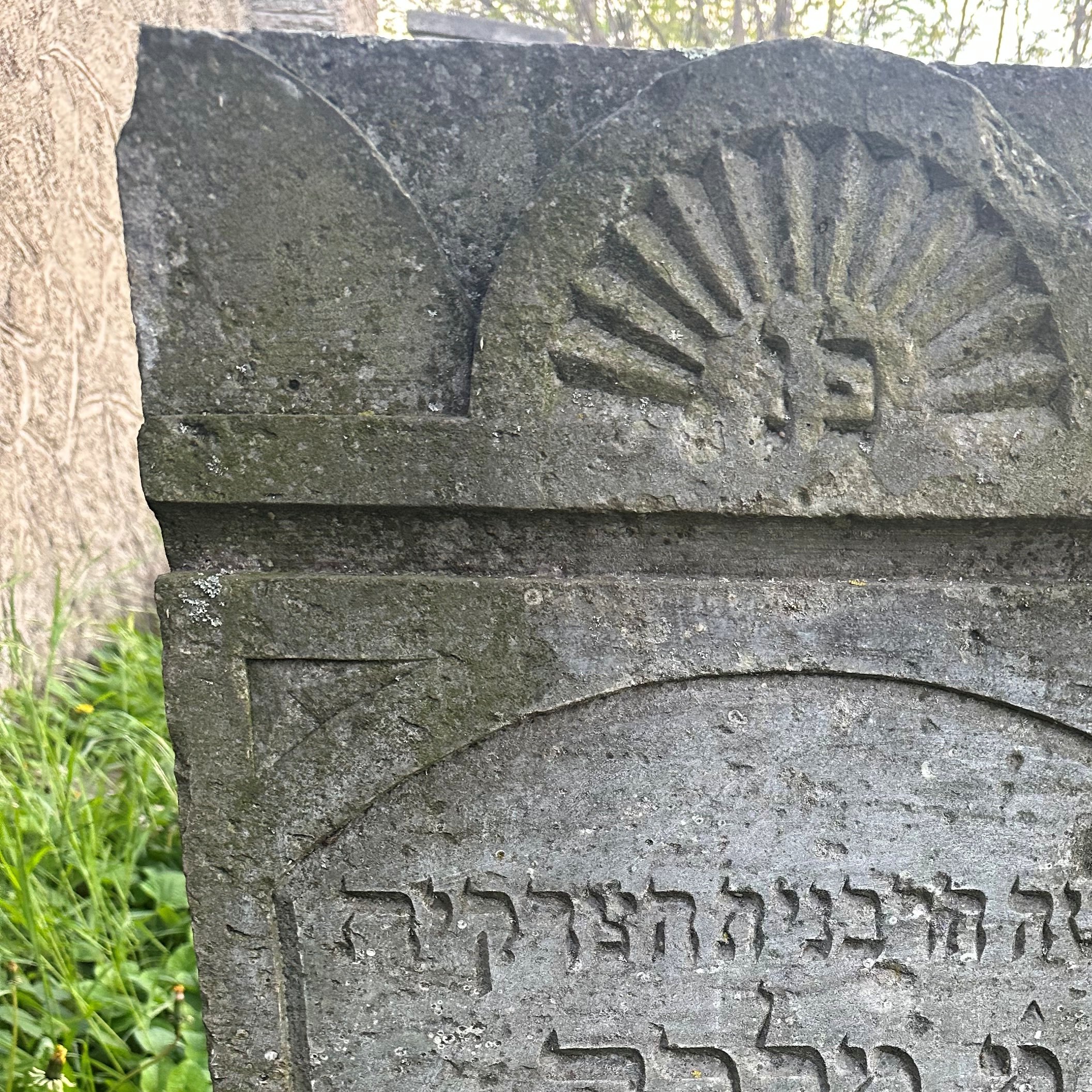
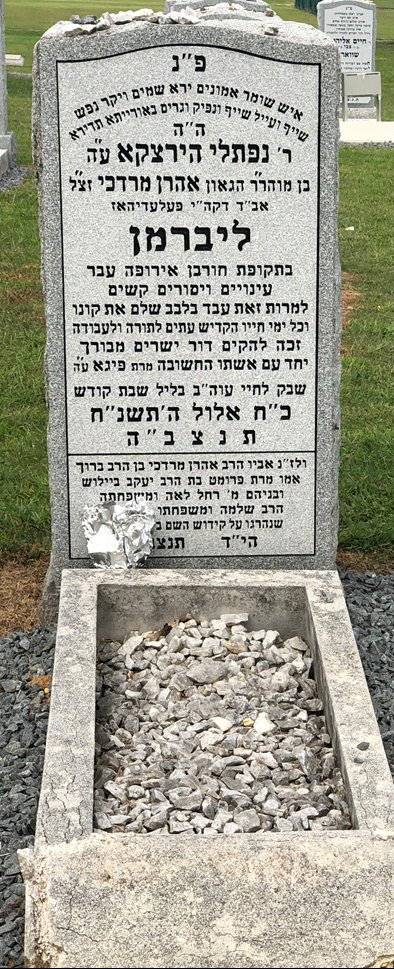
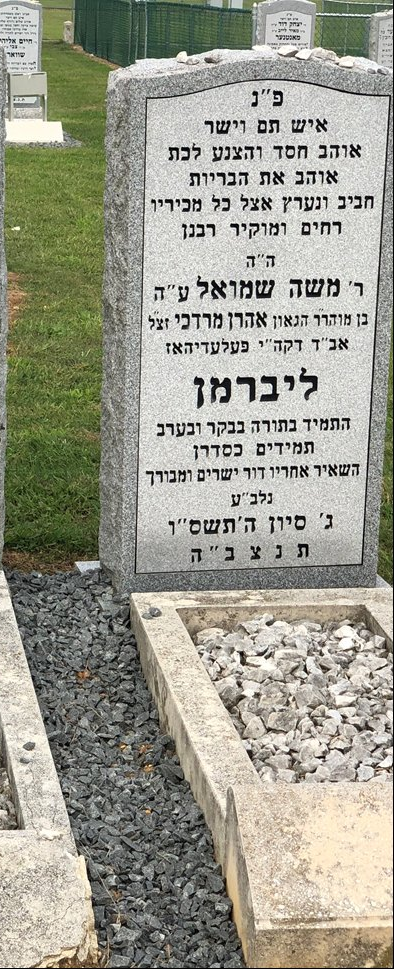
Reb Ahron Mordechai Lieberman זצ"ל הי"ד · Av Beis Din of Felegyhaz
Origins & Youth. Born on י' אלול ה'תרמ"ו / 10 Elul 5646 (September 9, 1886) in Balassagyarmat into a family steeped in rabbinic lineage. His father Reb Boruch Lieberman served as Dayan of the community — a distinguished talmid chacham who had been the assistant rav to the famed gaon and posek Reb Ahron Dovid Deutsch, baal mechaber Goren Dovid, a talmid muvhak of the Chasam Sofer. Through his paternal line, Reb Ahron Mordechai was a direct descendant — a great-grandson — of the renowned gaon and tzaddik Reb Meir Avraham Klein, Av Beit Din of Tsheba (Békéscsaba), talmid of the Machatzis Hashekel and baal mechaber of Pri Tzaddik al haTorah. His grandfather was rav in Shenya (Szína) — a position the Lieberman family held for over one hundred years. Already in his youth, Reb Ahron Mordechai displayed exceptional and uncommon talents; it was evident to all that from within Balassagyarmat was rising a towering young cedar, a brilliant prodigy whose heart was drawn to ascend the heights of Torah.
The Be'er Shmuel's Yeshiva. Firm in his resolve to fulfill the teaching hevi goleh limkom Torah, Reb Ahron Mordechai set out to learn at the yeshiva of the gaon v'kadosh Reb Shmuel Rosenberg, Av Beis Din of Unsdorf, baal mechaber Be'er Shmuel — among the most renowned yeshivos of that era. In the Be'er Shmuel's home, young Ahron Mordechai was privileged to enjoy a unique closeness. His rebbi welcomed him warmly and even hosted him to live in his own home — an extraordinary privilege rarely granted to any talmid. This closeness was deepened by a personal connection: the Be'er Shmuel's Rebbetzin, like Reb Ahron Mordechai, was a descendant of the Pri Tzaddik of Csaba — linking them as einiklach of the same spiritual legacy. It was Reb Shmuel Rosenberg who shaped the character of his talmid Ahron Mordechai, forging his inner strength and guiding his growth; the influence of his rebbi remained evident upon him throughout his life.
Marriage. At the age of eighteen, on 8 Adar Beis 5665 / March 15, 1905, he married Rebbetzin Frimet (Fáni) Beilush — born 3 Marcheshvan 5644 (1883) in Pátsj (Mariapoch · Máriapócs) — daughter of R' Yaakov HaLevi Beilush, ABD of Yanushi (Kántorjánosi), and his wife Bina Gittel Zilberman, daughter of the holy Rav Herzkele Ratzferter. The Hungarian civil marriage record of "Ármin Lieberman" (his civil name) and "Fáni Beilus" was filed in Yanushi, Satmar County. Reb Yaakov Beilush was a prominent Torah figure — both a talmid and a hoyz bochur (in-house student) of the Maharyi Assad. The marriage united our line with a family whose own shidduch a generation earlier had been arranged by Reb Hershel of Liska (Olaszliszka), the Ach Pri Tevuah, who had brought together R' Yaakov Beilush with Bina Gittel — the marriage from which Frimet was born — when Rav Herzkele of Ratzfert (Újfehértó) came to Liska seeking a shidduch for his daughter. Following his marriage, Reb Ahron Mordechai lived in his father-in-law's home for several years, dedicating himself to limud HaTorah with diligence and intensity. R' Yaakov Beilush — renowned for his tzidkus, kedusha, and above all his unmatched diligence in Torah study — poured his own spirit into his son-in-law. It was during this period that Reb Ahron Mordechai also completed his training in horaah, becoming thoroughly proficient in halacha l'maaseh.

Hungarian civil marriage certificate of Ármin Lieberman (son of Barnak Lieberman and Fani Gulienplan) and Fáni Beilus, married on March 15, 1905 in Yanushi, Satmar, Hungary.
Semicha. Having acquired profound knowledge of Torah and a strong aptitude for halachic instruction, Reb Ahron Mordechai received semicha from his rebbi the Be'er Shmuel, as well as from the eminent Reb Eliezer Dovid Greenwald, Av Beis Din of Satmar and baal mechaber Keren LeDovid — among others. The esteem in which he was held by the leading poskim of his generation is captured in the Shu"t Maharyi Shteif: Reb Yonasan Shteif — dayan of Budapest and later one of the foremost poskim in America — addresses two responsa to him, in siman נ' opening "לכבוד ידידי וחביבי הרב הגאון הגדול" and in siman רפ"ד as "ידידי וחביבי הרב הגאון הגדול מעוז ומגדל... מוהר"ר אהרן מרדכי ליעבערמאן שליט"א." His original chiddushim on Talmudic topics are being prepared for publication by his grandson R' Chaim Tzvi Lieberman, a beloved talmid of Rabbi Akiva Sofer (the Daas Sofer, ABD Pressburg (Pozsony)) and a pillar of Torah Judaism in Johannesburg, South Africa.
Rebbetzin Frimet's father, R' Yaakov Beilush, was a talmid of three giants: the Maharyi Assad of Szerdahely (Dunajská Streda), the Ksav Sofer of Pressburg, and R' Yirmiyahu Loew of Oyel. He was deeply connected to the Divrei Chaim of Tzanz (Nowy Sącz) and to the Belzer Rebbe. He passed away 22 Marcheshvan 5682 (1921) and is buried in Yanushi. He authored Pri Mishnas Yaakov — chiddushei Torah published posthumously in 1980 by his grandson R' Chaim Tzvi Lieberman of Johannesburg (R' Ahron Mordechai's own son), from a manuscript rescued from a pile of discarded books in the Yanushi town square after the war.
The Maharyi Assad — R' Yehuda Assad זצ"ל, ABD Szerdahely — was the undisputed head of Hungarian Jewry after the passing of the Chasam Sofer, and the primary rebbe of R' Yaakov Beilush. The two extraordinary stories R' Yaakov witnessed in his home — the Heavenly Entourage and the Midnight Voice — are recorded in Pri Mishnas Yaakov and appear in full on the Maharyi Assad's tile in the Their World section.
Újfalu — First Rabbanus. Reb Ahron Mordechai assumed his first rabbinic position in his early twenties, when he was appointed Rav of the community of Újfalu, in the Mátészalka district of the Satmar region. From that point on, he emerged as a rising force in the rabbinic world. He led the community with great skill and success, founding and directing a yeshiva that quickly earned widespread respect and produced outstanding talmidim who went on to the great yeshivos of the time. He simultaneously gained recognition as a gifted orator and remarkable darshan, known for his eloquence and depth.
The Munkács Bond — and His First Milah. Reb Ahron Mordechai's warm closeness to Munkács found early expression in Újfalu at the bris of his son Shlomo, named for the Shem Shlomo (R' Shlomo Shapira, Rav of Munkács). The Shem Shlomo's son, the Darkei Teshuva (R' Tzvi Hirsch Shapira of Munkács), served as sandak, and Reb Ahron Mordechai himself was the mohel — the first milah he ever performed. From that day onward he served as mohel for all the boys of his kehilla. A few months later the Darkei Teshuva was niftar — on the second day of Sukkos, ט"ז תשרי תרע"ד (October 1913) — and Reb Ahron Mordechai named his next son, born in 1914, Tzvi after him. His bond with Munkács ran deep both before and after his Bilke years — the same closeness that would later move him, from Ricse, to issue a public proclamation in support of the Munkáczer Rebbe.
Bilke. After serving for approximately six years in Újfalu, around 1915 — in the midst of World War I — Reb Ahron Mordechai was appointed Rav of Bilke, a community of approximately 200 Jewish families in the Bereg region of Carpathian Russia. He brought with him a rare combination of Torah brilliance, worldly knowledge, and forceful leadership, and was already recognized as a rising figure in Carpathian Hungary. Almost immediately upon settling in Bilke, he founded a large yeshiva, which attracted bochurim from across the surrounding towns. His older sons assisted him in the yeshiva, and its graduates went on to study in the elite yeshivos of Slovakia — Pressburg, Galanta (Galánta), Nitra, Serdehel, and Unsdorf. He served not only as rav and rosh yeshiva, but also as the town's mohel — one resident, Dovid Stern, later recalled that he was Rabbi Lieberman's first bris in Bilke. His tenure in Bilke coincided precisely with the turbulent and harrowing period of the war: the Jews of Bilke and the surrounding regions suffered severe poverty, persecution, and oppression, with many households left without breadwinners drafted to the front. Reb Ahron Mordechai emerged — despite his young age — as a pillar of strength: anyone suffering, whether emotionally broken or in desperate financial straits, turned to him, and he never turned anyone away empty-handed.
The Pesach Wheat Mission. As Pesach approached one wartime year, a critical problem arose: there was no wheat available for baking matzos. The war was raging, basic food supplies were severely short, and even on the black market wheat was nowhere to be found — transportation had collapsed, roads were filled with soldiers, and merchants could not bring in grain. There loomed a real danger that the Jewish communities across the entire region would be left without matzos. The leaders of surrounding towns and villages turned to Reb Ahron Mordechai Lieberman of Bilke, seeing in him a man of vitality and boundless initiative whose gadlus in Torah was matched by refined character and willingness to sacrifice for Klal Yisrael. They pleaded with him to serve as their emissary before the government authorities in Budapest. After overcoming numerous obstacles, he arrived in the capital and worked relentlessly for several weeks, going from one government office to another and mobilizing every person of influence within the administration. Through sheer determination he succeeded: the Hungarian government dispatched, through the Lishka, several train cars filled with wheat and flour specifically for the Jewish communities. The Jews of the region kept Pesach properly, and every individual recognized the debt of gratitude owed to the rav of Bilke.
The Joint Distribution Committee Comes to Bilke. Following the end of the war, deep scars remained: for four years individuals had been cut off from town and village life, the economic cycle had collapsed, and even those who had once lived comfortably were now impoverished. Some families had lost their sole breadwinner — missing in action, fallen in battle, or taken captive. Countless orphans were left with no one to help them. Reb Ahron Mordechai could not stand idly by. As a result of his tireless lobbying, the leaders of the Joint Distribution Committee — the major Jewish humanitarian organization founded during WWI — were persuaded to expand their operations and include the suffering Jews of Carpatho-Rus, who had long been neglected. One unforgettable moment that left a lasting impression: the JDC's official automobile — bearing its American insignia — pulling up in front of the rav's home in Bilke. Such an occurrence was nearly unheard of in that era. A wave of emotion swept through the region; thousands of Jews gathered around the rav's home, hearts filled with hope, awaiting the prospect of real relief. Soon after, an official announcement was made: all those in need should prepare documentation and appear at a designated time and place to receive their portion of the aid.
Founding the Lishkas HaYire'im — and Becoming Its President. With the conclusion of WWI and the annexation of Carpatho-Rus to the newly established Czechoslovak Republic in 5678 (1918), Jewish communal life faced a new urgency. Foreign winds of secularism were sweeping through Jewish communities; secular Jewish parties and Zionist movements were aggressively recruiting from yeshiva circles, laying traps for promising young talmidei chachamim. In response, the spiritual lions of the generation arose: Rabbi Shlomo Sofer (son of the Ksav Sofer and ABD Beregszász), Rabbi Yosef Tzvi Dushinsky of Chust (Huszt) (who later emigrated to Eretz Yisrael and succeeded R' Yosef Chaim Sonnenfeld as Raavad of Yerushalayim), and Rabbi Avraham Yosef Grünwald (ABD Ungvár), joined by other leading rabbonim across Carpathian Russia, established the Lishkas HaYire'im, the Orthodox Bureau of Carpatho-Rus, with its headquarters in Ungvár — modeled after the central Orthodox Bureau in Pressburg. Reb Ahron Mordechai quickly emerged as one of its most prominent figures. His reputation extended far beyond Bilke, and he was appointed to a leadership position in the Bureau, eventually rising to serve as its president. In that role, he represented the Orthodox community in negotiations with the Czechoslovak government in Prague, staunchly defending religious autonomy and resisting secular encroachment. His eloquence and moral authority made him a sought-after speaker and trusted mediator. In May 1926, the Deputy Governor personally summoned him to help resolve communal disputes in five towns including Ilosva and Brod — a striking testament to the government's recognition of his stature and integrity.
A Letter in His Own Hand — Bilke, תר"פ / 1920. A handwritten letter from Reb Ahron Mordechai, in his own hand and signed by him, has surfaced — written from Bilke in תר"פ (1920), in his years there as ABD, to the gaon R' Chaim Brody, Av Beis Din of Prague, a grandson of R' Shlomo Ganzfried, the Kitzur Shulchan Aruch. The letter takes up a sensitive communal matter the two had begun to discuss פא"פ — face to face — during a prior visit: "אשר עשינו צעדי התחלה כפי הצעתי אצל מר ת"ה... פא"פ בהיותי במחיצתכם." He then refers obliquely to an assembly in Ungvár convened by the Zionists that he had been called to attend — "הלא שמעתם אשר קראנו באסיפה באונגוואהר ע"י הציונים מצד אחד..." — and, tellingly, declines to commit the rest to writing: "בסיבות אשר אי אפשר להעלותם על הכתב" — "for reasons that cannot be put on paper." A rare tangible glimpse of the discreet diplomatic work — the kind of work the Lishka was already conducting in those years to defend the autonomy of Carpatho-Rus Orthodoxy.
Years of Leadership. Reb Ahron Mordechai devoted himself to fostering peace within a Carpatho-Rus Orthodox community torn by internal strife: he traveled tirelessly from community to community, attending meetings and presiding over complex din Torah cases — some of which stretched on for many days or even weeks. With his wisdom and insight, he succeeded in restoring peace and unity between opposing factions. Among his close personal friendships was one with R' Yoel Teitelbaum, the future Satmar Rav. Reb Ahron Mordechai frequently had to travel to the city of Orshiva, where the judges and district officials of the regional government were located — Bilke fell within the "Bereg" district. The judges greatly respected and gave significant weight to the opinions of the rabbonim, and Reb Ahron Mordechai was often required to appear before the local authorities. On such occasions he would always take the opportunity to visit Reb Yoel, and the two would converse with warmth and affection — a testimony recorded by Reb Ahron Mordechai's son R' Naftali Herzka Lieberman, our direct ancestor, who personally relayed it to the author of Moshian shel Yisrael. Reb Yoel, in turn, visited Reb Ahron Mordechai's home on a number of occasions, as related by his grandson Reb Ahron Lieberman of Monsey, New York, in the name of his father R' Chaim Tzvi Lieberman.
Defending the Authority of Sighet (Máramarossziget). In 1923, a pivotal territorial shift reshaped the communal allegiances of the Jewish communities in the Maramoros region. The Treaty of Trianon had redrawn the map of Central Europe following WWI, and by that year Maramoros was effectively split between Czechoslovakia and Romania. The city of Sighet, historically a central rabbinic authority, remained within Romania, while the nearby town of Oyber-Apsha (Felsőapsa) (Upper Oyber-Apsha) fell under the jurisdiction of the newly formed Czechoslovakia. A faction within Oyber-Apsha began to claim that since the town was no longer politically tied to Sighet, it was no longer obligated to remain under the authority of the Sighet Rebbe, the Atzei Chaim (R' Chaim Tzvi Teitelbaum, son of the Kedushas Yom Tov and father of the future Berach Moshe). The matter came before R' Yosef Tzvi Dushinsky, Av Beis Din of Chust, who ruled unequivocally that the geographic border shift did not sever the religious and halachic ties between Oyber-Apsha and Sighet — the Atzei Chaim remained the Rav and Av Beis Din of the village, without whose permission no one could rule or teach. The dissenting faction refused to accept the psak, deepening the division. In response, a powerful public letter (michtav galui) was published in the periodical Beis Va'ad LaChachamim — signed by several of the leading rabbinic figures of the time, including R' Avraham Yosef Grünwald of Ungvár, the AB"D of Selish (Nagyszőlős), the AB"D of Volove, the AB"D of Torna, and Rabbi Aharon Mordechai Lieberman. The letter declared that it was halachically assur to split from the Sighet kehillah; warned that any rulings issued by the breakaway group's leaders were invalid; and that any shechita performed by their shochtim would be neveilos u'treifos. The reprinted pamphlet Michtav Galuy also contained the letter of R' Yoel Teitelbaum (the Atzei Chaim's younger brother, later the Satmar Rebbe).
The Munkacz Conflict. Despite his many public accomplishments, Reb Ahron Mordechai faced growing internal opposition during his tenure in Bilke. Tensions escalated after his appointment as head of the Lishka — a post the influential Munkacz faction had expected to control. As an Oberlander, his moderate stance contrasted sharply with the dominant Munkacz Chassidim. After WWI, the Belzer Rebbe and the Spinka (Szaplonca) Rebbe had briefly relocated to Ungvár and likewise clashed with Munkacz; when they later departed, Munkacz assumed their followers would align with them — but many instead supported Reb Ahron Mordechai, whose leadership symbolized resistance to Munkacz dominance. The ideological and political divide left lasting tension within the Bilke community.
By 1926, tensions in Munkacz had reached a breaking point. R' Yoel Teitelbaum had moved to Romania, and the Minchas Elazar of Munkacs (Munkács) paid the Spinka Rebbe 100,000 crowns to leave town — clearing the way to tighten his control. The campaign against Reb Ahron Mordechai only grew more hostile. One Friday night, stones were thrown into his home, terrifying his family. That same night, they fled across the town's footbridge to seek shelter with a loyal supporter. Most of the townspeople were shocked and infuriated by the chillul Hashem and chillul kvod haRav. Despite pleas from his many loyal supporters urging him to remain, he chose to leave — determined not to be the cause of further division within Klal Yisrael. Soon after, he publicly resigned, and on Parshas Tzav delivered an emotional drashas preidah to a packed shul. The town's elders accompanied him to the train station as he departed for Ricse. Even after leaving, his connection to Bilke endured: over the years he maintained ties with members of the former kehilla who had remained loyal, hosted delegations, sent personal letters and Shana Tovah cards, and invited old friends to his children's weddings. When his eldest son Herzkele married in Ungvár, former Bilke townspeople attended the chasuna.
A Proclamation for Munkacz. Despite the tensions he endured from certain circles of the Munkacz Chassidim, Reb Ahron Mordechai remained a man of principle and peace, never allowing personal grievance to cloud his commitment to truth. While residing in Ricse, he issued a fiery and uncompromising proclamation addressed to the broader Jewish community of Munkacz. In this powerful missive, he took a firm stand in support of the Munkaczer Rebbe and denounced the destructive influence of the Neolog and "Status Quo" movements. With emotion he declared: "חיל ורעדה אחזתני, פחד ופחדתי, ואוי לנו שבימינו כך עלתה" — "Terror and trembling have seized me, I was gripped with dread, and woe unto us that such a thing has come to pass in our time." He sharply condemned the factions that, in his words, had raised their hand against the Torah, asserting that any community affiliating with these movements had forfeited halachic legitimacy — "זביחתם והוראתם אסורה ופיגול לא ירצה" ("their slaughter and their rulings are forbidden, and as piggul shall not be accepted"). He concluded with a call to decisively separate from such groups, invoking the eternal principle of the Chasam Sofer: "חדש אסור מן התורה".
Ricse. After learning of the prolonged hardship his first cousin was experiencing in Bilke, Adolph Zukor — founder of Paramount Pictures and by then an internationally successful entrepreneur — took action to help. Zukor was closely related: his mother Chana was the sister of Reb Boruch Lieberman and of the renowned R' Nosson Lieberman, baal mechaber Imrei Daas — the siblings coming from a distinguished rabbinic family. Following the death of Zukor's father Yaakov Zucker when he was just one year old, and the loss of his mother at age seven, young Adolph was raised in the home of his uncle Reb Kalman Lieberman (Reb Kalonymus Kalman, ABD Tarna, Mátészalka, and Kashau). In 1927, Zukor returned to Ricse and pledged to rejuvenate the town's Orthodox community through direct intervention. At his request, Reb Ahron Mordechai was appointed Chief Rabbi of Ricse and the Lower Bodrogköz Rabbinical District (which included Kerestir / Bodrogkeresztúr). In the post he succeeded Reb Shmuel Gross — the son-in-law of the holy Reb Yeshaya Steiner of Kerestir (1851–1925), known universally as "Reb Shayale" — one of the most beloved tzaddikim of Hungarian Chassidus, renowned for his ahavas Yisrael, his open table for the poor, and his power of bracha, whose kever in Kerestir still draws tens of thousands each year on his yahrzeit. The deeper reason for the change was a question of fit: Reb Gross was a Chassidishe rav, and the Ricse kehilla was drifting away from that mold; its leadership felt that an Oberlander like Reb Ahron Mordechai would better suit the direction the community was taking. According to contemporary newspaper reports, Zukor first persuaded Reb Gross to step down — paying him $3,000 to relinquish the position — then agreed to cover his cousin's salary and donated $6,000 toward construction of a new seven-room residence for the rav. The formal inauguration took place on March 31, 1927, marked by a grand civic welcome: flags adorned the shul's courtyard, children greeted the rav with singing, and regional officials praised his educational vision and commitment to religious-moral instruction. The Zsidó Újság emphasized that it was Zukor's personal request and funding that enabled the community to obtain a rav of such caliber. The following year, Zukor further demonstrated his devotion by donating a newly commissioned Sefer Torah, ornately adorned with silver crowns and a velvet mantle. The dedication on Shavuos 5688 (1928) began the night before Yom Tov at the home of communal president Jenő Löwenkopf, locally called the "Zukor Castle," where the final letters were completed and Reb Ahron Mordechai delivered a shiur. On Yom Tov morning the entire town gathered for a public procession: prominent members carried the Torah from the Zukor residence to the shul, where Reb Ahron Mordechai and the elders welcomed it with the singing of S'u She'arim Rosheichem. Inside the decorated shul, he ascended the bimah and offered a drashah on the Torah's first letter — ב (Beis) — teaching that its numerical value, two, signifies the twin foundations of Torah: Yissachar, who learns, and Zevulun, who supports. "Just as Torah study sustains the soul of the Jewish people," he said, "so does charitable support. They are partners — each essential, each sanctified."
Felegyhaz — Election. Although Zukor had intended R' Ahron Mordechai's role in Ricse to be long-term, the same leftward drift that had made Reb Gross seem out of step soon proved a poor fit for Reb Ahron Mordechai as well: the community kept moving further from tradition than even an Oberlander rav could countenance, and he came to understand that Ricse was not a long-term home for him. When he traveled to meet the coalition assembling the rabbanus in Felegyhaz and was offered the post, his mind was made up on the spot — he telephoned his wife to tell her that he would not be returning to Ricse, and that she should simply come meet him in Felegyhaz, bringing his bigdei Shabbos with her. He accepted the prestigious post of Chief Rabbi of Felegyhaz in late 1928. After more than half a century without a permanent rav, the Orthodox Jewish community of Felegyhaz elected him as its Chief Rabbi in early September 1928. The election passed with an overwhelming majority. A week later, on September 13, the leadership formally received him at the Orthodox central office, where he was presented with a rabbinic contract signed by 90% of the community's tax-paying members. The press praised him as a talmid chacham of distinction — highlighting his early Torah brilliance, his semicha from the gaon of Unsdorf, his leadership roles in Bilke and Ricse, and the support he had received from his cousin Adolph Zukor.
The Installation. The formal installation ceremony took place on Thursday, October 25, 1928, and was a major public event. After departing Ricse, Reb Ahron Mordechai was received in Budapest by a group of admirers. In Kecskemét, delegations from both Kecskemét and Félegyháza joined together to escort him. At the Félegyháza train station, a large and enthusiastic crowd greeted him with singing. A formal procession of carriages led him through the town beneath a triumphal arch and chupah, culminating at the shul. The packed shul echoed with music and heartfelt greetings. Later that afternoon, official delegations arrived to offer congratulations — representatives from nearly every major civic institution in the city: the State Police, Royal Tax Office, Teacher Training College, local trade guilds, merchants' associations, and schools. The ceremony concluded with Reb Ahron Mordechai reciting Tehillim at the aron kodesh and delivering a powerful inaugural address, in which he vowed to uphold the sacred traditions of Yiddishkeit and to promote peace and unity. Over the coming years his authority remained uncontested. On April 4, 1930, the community submitted a public clarification to Zsidó Újság: "In Félegyháza, there is only one functioning rabbi, namely Chief Rabbi Ármin Liebermann." Nearly fourteen years into his tenure, this status remained official: the 1942 Hungarian government civil registry still listed "Liebermann Ármin" as the recognized rav of the Orthodox community.
Tiferes Bachurim. In late 1928, Reb Ahron Mordechai founded the Tiferes Bachurim society in Felegyhaz. According to Zsidó Újság, the society was formally established on November 25, 1928, under his presidency. Officers included Klein Vilmos, Klein Mór, Klein Sándor, Friedmann Béla, and his son Liebermann Ferenc. Two years later, he published a far-reaching article titled "Az orthodox ifjúság" ("The Orthodox Youth"), outlining his national vision for strengthening Torah life among both yeshiva students and working youth. He rejected proposals for vocational yeshivas, promoted centralized Orthodox youth leadership, and emphasized daily learning, full shmiras Shabbos, and public integrity. His message was soon cited as a national model — at the 10th anniversary of Tiferes Bachurim in Csorna (March 1930), attended by over 20 towns, his article was referenced as a guiding framework.
Guardian of the Sacred. From the moment he arrived in Félegyháza, Reb Ahron Mordechai assumed full spiritual responsibility for the community. A talmid of the Be'er Shmuel, he upheld the principle that all deviations from Torah must be actively resisted. Though not involved in political parties, he was unyielding in his defense of Torah values. In particular, he rejected calls to deliver drashos in Hungarian, insisting on maintaining Yiddish, in accordance with the Chasam Sofer, the Maharam Schick, and the Machaneh Chaim. This position drew increasing resistance, particularly from the Neolog-aligned faction. When efforts to persuade him failed, opponents resorted to public harassment, including a pamphlet campaign led by Ignác Kun. On January 20, 1929, Kun issued a public printed retraction, confessing that his prior accusations were false and begging forgiveness. But the conflict continued. In 1933, Reb Ahron Mordechai filed a defamation suit against Kun — forty-nine witnesses were called before a royal court in Kecskemét. Then, on Shabbos, February 11, 1934, Kun disrupted the davening, demanding the drashah be delivered in Hungarian. Kun was convicted of disturbing religious worship and sentenced to 20 days in prison. The rav magnanimously allowed the sentence to be commuted to a fine — but the legal outcome was a complete public vindication of his principled stand.
The Ksav Horaah from the Ihel Rav. A striking testimony to the stature Reb Ahron Mordechai commanded among the gedolei hador comes from a single document. R' Dovid Dov Meisels — the Binyan Dovid, last Rav of Ihel (Sátoraljaújhely) — wrote a ksav horaah (rabbinic ordination) for R' Chananyah Yom Tov Lipa Weinberger הי"ד, the son-in-law of R' Ahron Mordechai who married his daughter Rochel Leah in 1936. In that document the Ihel Rav referred to Reb Ahron Mordechai as "Yedid Nafshi" — friend of my soul — words of extraordinary intimacy from the rav of the city of the Yismach Moshe and the Yeitev Lev to the rav of Felegyhaz in the years before the Churban.
A Warning at the Regent's Celebration. Reb Ahron Mordechai spoke in shul on a number of the occasions marking the anniversary of the reign of the Hungarian regent Miklós Horthy. On one such occasion he declared openly that Horthy would bring great tzaros upon Klal Yisrael — a fearless warning, voiced at an observance meant to honor the regent, of the catastrophe he foresaw approaching.
An Offer of Escape — Declined. In these years Reb Ahron Mordechai was offered a shteller in the rabbanus in America. He turned it down: his Rebbetzin Frimet would not bring the family to what she called the treife medina. This was no idle possibility — his first cousin Adolph Zukor, who had already brought him to Ricse and funded his rabbanus there, famously stood ready to pay the travel and relocation costs of any of his relatives who wished to come to the United States. The family remained in Hungary.
A Place on the Kasztner Train — Given Up. When the rescue transport later known as the Kasztner train was being arranged, a place on it was secured for Reb Ahron Mordechai. Negotiated in 1944 by Rudolf (Rezső) Kasztner with the SS, this train carried some 1,680 Hungarian Jews out of the country in exchange for money, gold, and diamonds, eventually reaching safety in Switzerland by way of Bergen-Belsen; among its passengers were many rabbonim and gedolim. With deportation to Auschwitz the fate awaiting almost all of Hungarian Jewry, a seat on it was, quite literally, a place among the saved. He gave it up. He would not save himself while his kehilla remained behind, and he chose to stay with them to the end.
Al Kiddush Hashem. As the storm of WWII engulfed Hungary, Reb Ahron Mordechai remained the steadfast leader of the Orthodox kehillah. Official Hungarian records from April 1944 listed him — under his Hungarian name Ármin Liebermann — as the sole rabbi of the Orthodox kehilla, in the role of anyakönyvvezető rabbi (civil registrar). During those same weeks, local authorities — acting under German direction — began establishing a Jewish Council (Zsidó Tanács). Both the Orthodox and Neolog communities jointly nominated five respected individuals to represent them, including Reb Ahron Mordechai. But the mayor rejected the proposal and appointed a lay-led council that excluded all religious figures — part of a broader Nazi strategy to sideline rabbinic leadership. Still, the fact that the community chose to nominate their rav demonstrated the deep trust and reverence they continued to hold for him, even on the eve of catastrophe.
When the Jews of Felegyhaz were forced into the ghetto, they were confined to the area around Bercsényi Street, where the synagogues and communal institutions were located. To create space, over 100 Christian families were displaced to make room for the 230 Jewish families relocated there. Conditions were harsh, cramped, and humiliating. Among the gentiles who showed compassion was a non-Jewish woman who quietly brought food into the ghetto; when her act of kindness was discovered, she was arrested and deported along with the Jews — a rare and tragic example of moral courage. On June 14, 1944, gendarmes came and called out one member from every family. One survivor recalled: "They lined us up against the wall, pointed bayonets at us, and told us to be ready early in the morning." A gendarme said to an elderly woman slowly collecting her things: "Drop it, you won't be needing it anymore." He was right.
On June 15, 1944 the final deportation began with a march through Kossuth Street toward the train station. Elderly and infirm Jews were loaded onto trucks; the rest were forced to walk under heavily armed guards. In one horrifying moment, the gendarme commander Márton Zöldi launched a brutal attack on Reb Ahron Mordechai in full view of the crowd — tearing out his beard, beating him viciously, and leaving him bleeding in the street. Some onlookers spat and shouted curses; most of the townspeople stood in sorrow and shock. At the White School on Kossuth Street, where the Jews were detained before transport, they were stripped and subjected to degrading inspections by midwives from the Jókai Street maternity clinic. One midwife whispered: "I'm so sorry I have to do this. Please forgive me." That night, 983 Jews — 269 men, 341 women, and 373 children — were forced into sealed cattle cars, 80 per wagon. The next morning, June 16 at 5 a.m., the train departed for the Kecskemét brickyard, then to the copper sulfate factory where over 5,400 Jews were held on the factory floor, stripped of their clothing. Conditions were so horrific that 70 people took their own lives by poisoning themselves. In two transports on June 25 and June 27, they were deported to Auschwitz. Nearly 90% were murdered upon arrival. Among the kedoshim was their rav, Reb Ahron Mordechai Lieberman, who perished al kiddush Hashem together with his kehillah on 10 Tammuz 5704 / 1944. His wife Rebbetzin Frimet הי"ד shared the same yahrzeit.
On the Transport — Mechazek the Oilam. A survivor of those transports, Leah Schnapp of Felegyhaz — deported to Auschwitz at the age of sixteen — related to Reb Ahron Lieberman of Monsey, NY (a grandson of Reb Ahron Mordechai) that even on the journey to Auschwitz, Reb Ahron Mordechai gave a drasha to be mechazek the whole oilam — strengthening them to be moser nefesh al kiddush Hashem. Schnapp was sent from Auschwitz to forced labor at Salzwedel, where she was liberated, and after the war emigrated to Eretz Yisrael; she recorded her experiences in her memoir, Hatikvah in Auschwitz.
The First Liberators. There is a profound measure of comfort in how this chapter turned: the very communities Reb Ahron Mordechai had served and shepherded as their rav would, in their darkest hour, be reached by his own children among their first liberators. Two sons of Reb Ahron Mordechai — Herzkele and Moshe Lieberman — served in the Czech Legion, a unit formed in Russia during WWII. Many of its Jewish recruits came from Carpathian Ruthenia, having fled or been deported to Soviet labor camps (munkatábor). After training, they joined the Soviet advance on the Eastern Front. In October 1944 (Tishrei 5705), the Legion was among the first to re-enter the region, fighting fierce battles against the retreating German and Hungarian forces. And so it was that Herzkele and Moshe stood among the soldiers who helped free the Jews of the very region their father had led — sons completing, in uniform, the work of protection their father had given his life trying to provide.
His Children. Reb Ahron Mordechai and Rebbetzin Frumit's children carried forth his legacy across the world:
- R' Naftali Herzka Lieberman of Brooklyn — niftar כ"ה אלול תשנ"ח · our direct ancestor (Generation 6)
- R' Shlomo Lieberman הי"ד — tragically murdered on the way to Auschwitz
- Rochel Leah הי"ד — married in 1936 to R' Chananyah Yom Tov Lipa Weinberger, who lived in Felegyhaz, delivered shiurim to local baalei batim, and eventually founded a yeshiva. After the war his surviving brother Chaim Shimon published his kesavim in the sefer Shaarei Yom Tov. They had four children; their youngest son Chaim Shmuel was born after Rav Yom Tov had already been killed al kiddush Hashem. Rochel Leah's yahrzeit is י' תמוז
- R' Chaim Tzvi Lieberman — settled in Johannesburg, South Africa — niftar כ"א אב תשס"ג
- Esther Lieberman הי"ד — remained single and moved into her sister Rochel Leah's home to help with the family after Rav Yom Tov was deported. She was later deported with the Jews of Felegyhaz. Her yahrzeit is י' תמוז
- R' Shalom Bunim Lieberman — later settled in Tel Aviv
- R' Moshe Shmuel Lieberman — lived in Boro Park — niftar ג' סיון תשס"ו
- R' Yaakov Lieberman — lived in Modi'in Illit
The new edition of the Pri Tzaddik cites Reb Ahron Mordechai Lieberman ztz"l by name (footnote 24, p. 33) as a transmitter of traditions about the Pri Tzaddik heard in the yeshiva of the Be'er Shmuel — completing the circle that began when Reb Shimon Lieberman of Shenya married Malka, daughter of the Pri Tzaddik himself.